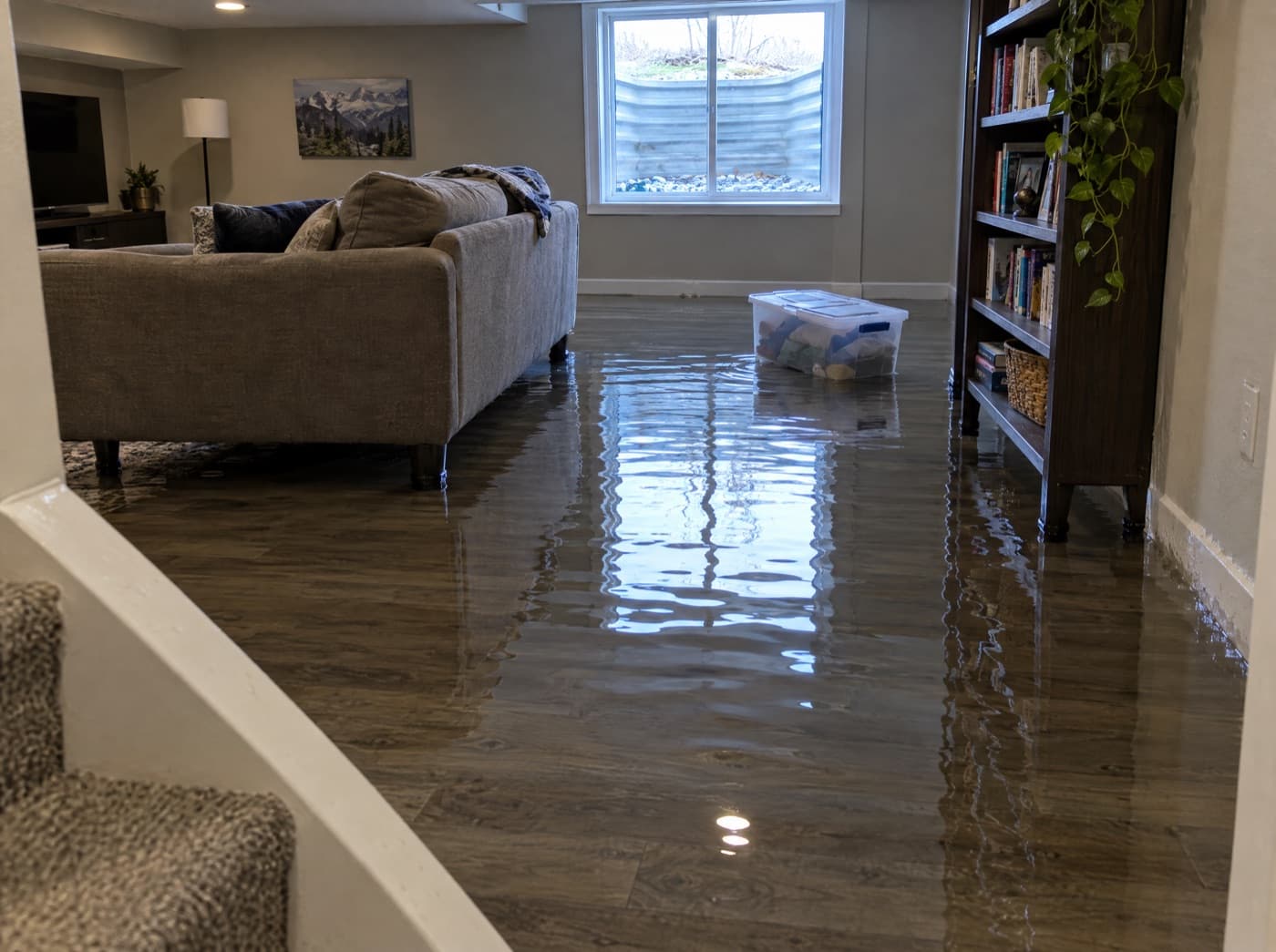
Basements flood from below and from the side: a sump pump that quits during a storm, groundwater pushing through a foundation crack, snowmelt pouring into a window well, or a floor drain that backs up. In Boulder, spring snowmelt and summer thunderstorms are when most basement calls come in.
Crews handle water damage claims from every major carrier, including:
State Farm
Allstate
USAA
Farmers
American Family
Liberty Mutual
Travelers
Nationwide
Insurers are named for reference only. We are not affiliated with or endorsed by any insurance company.
What to do in the next few minutes
Finished basements are the hard part. Carpet pad, drywall, and the framing behind it soak up water from the floor, and below-grade rooms stay humid long after the standing water is gone. Without commercial dehumidification, those materials can take weeks to dry on their own, which is plenty of time for mold.
Water category:Usually Category 2 (gray water); Category 3 if it came from outside or a sewer line
1Don't walk into standing water if it could reach outlets, extension cords, or a furnace. Turn off power to the basement from a dry spot, or wait for help.
2If the sump pump stopped, check that it's plugged in and the breaker hasn't tripped.
3Move valuables and anything on the floor to a dry level once it's safe.
4Take photos and video of the water depth before anything is pumped out.
5Check whether water came in through the drain, the walls, or a window well. It matters for insurance.
How a certified crew handles flooded basements in Boulder
Step 1
Pump-out and extraction
Submersible pumps clear deep water first, then extractors pull water from carpet and pad so the crew can decide what can be saved.
Step 2
Sorting what stays
Pad soaked with gray water is usually removed. Carpet can sometimes be cleaned and reinstalled; drywall is typically cut above the wick line.
Step 3
Cleaning and antimicrobial
Groundwater and drain water carry bacteria, so floors and wall cavities are cleaned and treated before drying.
Step 4
Below-grade drying
Basements need more dehumidification than above-grade rooms. LGR dehumidifiers run with air movers until the slab and framing read dry.
Step 5
Cause and documentation
The crew notes where the water entered, which your insurer will ask about, and documents the loss with photos and moisture logs.
Local notes
What Boulder homeowners should know
Basement calls in Boulder spike during spring snowmelt and summer thunderstorms. Homes on sloped lots in North Boulder and along the foothills take runoff toward their foundations, and the September 2013 flood showed how fast creek corridors can overwhelm a neighborhood. If you live near Boulder Creek or one of its tributaries, check your flood zone and consider a sump pump with battery backup.
Insurance
Will insurance cover it?
Coverage depends on where the water came from. A burst pipe or appliance leak in the basement is usually covered. Water from a failed sump pump or backed-up drain is excluded from a base HO-3 policy unless you have a water backup endorsement. Groundwater seepage and surface flooding are generally excluded and only covered by a flood policy.
Snowmelt raises groundwater and soaks the soil against foundation walls. If gutters dump water next to the house, window wells fill, or the sump pump can't keep up, water finds its way in through cracks, joints, and drains.
Can I just use a shop vac and fans?
For a small puddle of clean water, maybe. For anything that reached carpet pad or drywall, household fans don't remove moisture from the air, and the basement stays damp. Commercial dehumidifiers are what actually dry a below-grade room.
Is a flooded basement covered by homeowners insurance?
It depends on the source. Sudden plumbing leaks usually are. Sump failures and drain backups need a water backup endorsement. Groundwater and surface flooding generally need flood insurance.