Water extraction and structural drying in Boulder, CO
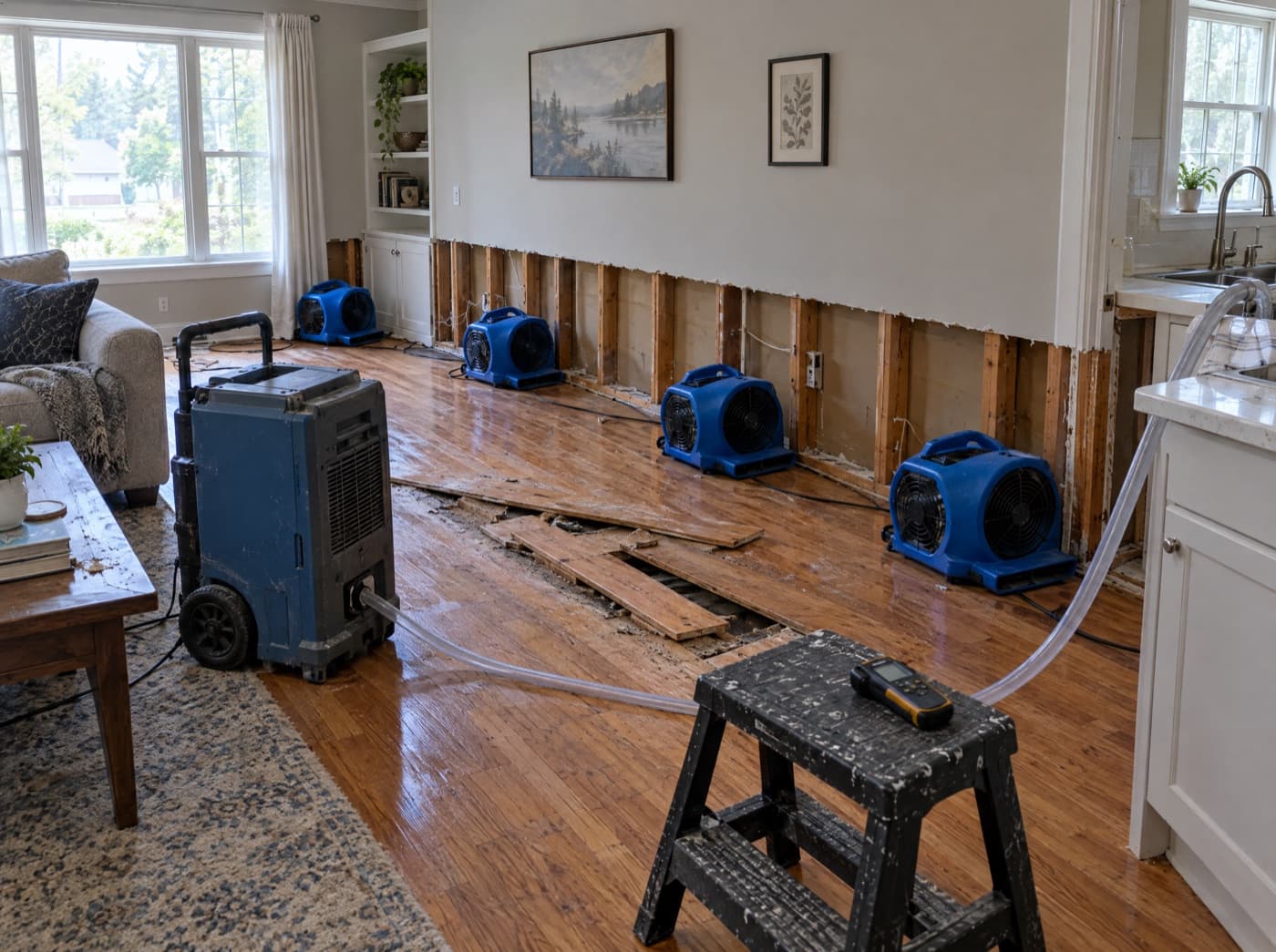
Removing the water you can see is the easy part. The water you can't see, inside wall cavities, under flooring, and in the framing, is what causes swelling, odors, and mold weeks later. Structural drying is the process of getting all of it out and proving it's gone.
Crews handle water damage claims from every major carrier, including:
State Farm
Allstate
USAA
Farmers
American Family
Liberty Mutual
Travelers
Nationwide
Insurers are named for reference only. We are not affiliated with or endorsed by any insurance company.
What to do in the next few minutes
Professional drying follows the ANSI/IICRC S500 standard. Crews measure moisture in every affected material, set up enough dehumidification and airflow for the size and type of loss, and take readings every day until each material is back to its normal, dry level. Those daily logs are also what your adjuster uses to approve the bill.
Water category:All categories
1Stop the water source and take photos.
2Lift furniture onto blocks or foil so legs don't stain wet carpet.
3Open interior doors to help air move, but don't crank the heat. It can spread moisture.
4Don't seal up the area or close wet walls with plastic yourself.
5Call for extraction within the first 24 hours if you can.
How a certified crew handles water extraction & drying in Boulder
Step 1
Assess and measure
Every wet material is tested and mapped so the drying plan matches the actual damage, not just the visible stain.
Step 2
Extract
Truck-mounted or portable extraction removes as much liquid water as possible. Every gallon pulled out is a gallon dehumidifiers don't have to.
Step 3
Set up drying
LGR dehumidifiers and air movers are placed based on room size and the class of water loss. Wall cavities may be opened or vented.
Step 4
Monitor daily
Readings are taken every day and equipment is adjusted. Most jobs reach dry standard in three to five days.
Step 5
Verify and hand off
Final readings confirm everything is dry before rebuilding starts, and the drying logs go into your claim file.
Local notes
What Boulder homeowners should know
Boulder's dry air helps once drying is underway, but basements and wall cavities stay humid far longer than the outdoor air suggests. Below-grade rooms still need commercial dehumidifiers, and moisture readings, not the weather, decide when the job is done.
Insurance
Will insurance cover it?
Professional drying is usually part of any covered water loss, because insurers expect you to prevent further damage. Daily moisture logs and photos are what justify the number of drying days and pieces of equipment on the invoice.
How long does it take to dry a house after water damage?
Most residential water losses dry in three to five days with professional equipment. Hardwood, plaster, and concrete can take longer. The crew should show you daily readings so you know where things stand.
Why can't I just use fans from the hardware store?
Fans move air, but they don't remove moisture from it. Without dehumidifiers the water just moves from the floor into the air and back into other materials. Commercial LGR dehumidifiers pull that moisture out of the house.
What is a 'dry standard'?
It's the normal moisture level of a material in your home, measured on an unaffected area. Drying is complete when wet materials read at or near that baseline.