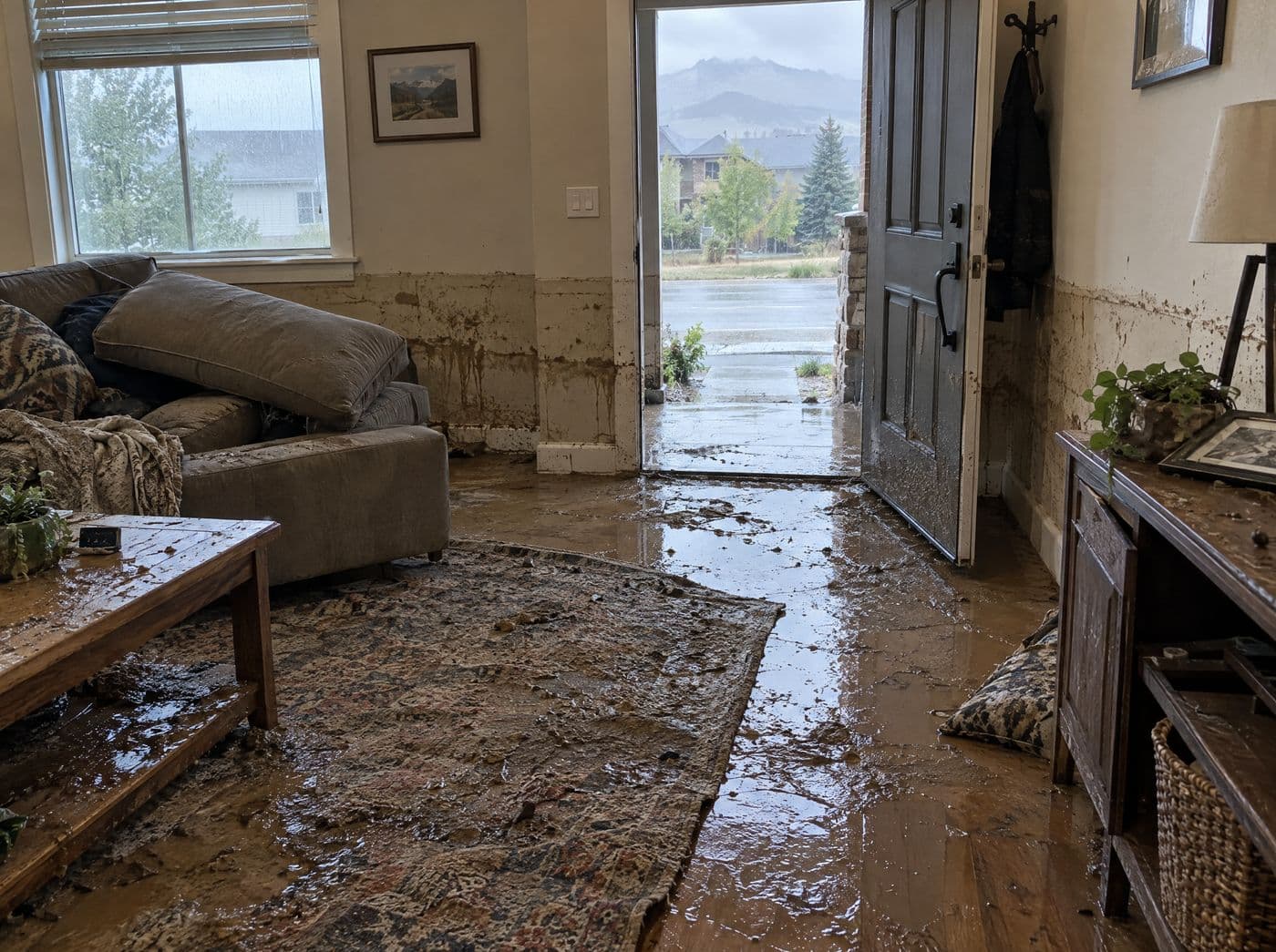
Flood damage restoration and cleanup in Boulder, CO
Flood water is different from a leak. When a creek overflows, a storm drain backs up, or a flash flood pushes through the front door, the water carries soil, sewage, fuel, and whatever else it crossed on the way in. Under the IICRC S500 standard, water like that is Category 3 from the start, even if it looks clear.
Crews handle water damage claims from every major carrier, including:
State Farm
Allstate
USAA
Farmers
American Family
Liberty Mutual
Travelers
Nationwide
Insurers are named for reference only. We are not affiliated with or endorsed by any insurance company.
What to do in the next few minutes
That changes the job. Porous materials the water touched, such as carpet, pad, insulation, and the lower part of drywall, generally have to come out. Mud and silt are removed, every surface is cleaned and disinfected, and only then does drying start. Drying a flooded home without cleaning it first seals the contamination inside the walls.
Water category:Category 3 (black water)
1If water is still rising, move to higher ground and call 911. Never walk or drive through moving water.
2Don't turn on lights or appliances that got wet. If water reached outlets or the electrical panel, keep the power off and have an electrician check it.
3Keep children and pets away, and wear boots and gloves if you have to go in. Flood water can carry sewage.
4Photograph every room, the water line on the walls, and damaged belongings before anything is moved.
5Call your flood insurer or agent as soon as you can, and keep receipts for everything you spend.
How a certified crew handles flood damage restoration in Boulder
Step 1
Safety check and pump-out
The crew checks for electrical and structural hazards, then pumps out standing water so the rooms can be worked in.
Step 2
Mud and debris removal
Silt, mud, and soaked debris are cleared out. Contaminated carpet, pad, and insulation are removed and bagged.
Step 3
Flood cut
Drywall is usually cut above the water line so the wall cavity can be cleaned and dried instead of trapping contamination.
Step 4
Cleaning and disinfection
Floors, framing, and remaining surfaces are washed and treated with an EPA-registered disinfectant.
Step 5
Drying and records
LGR dehumidifiers and air movers run until framing and slab reach dry standard. Photos and moisture logs go into your claim file.
Local notes
What Boulder homeowners should know
Boulder Creek and its tributaries run out of the foothills and straight through town, and the September 2013 flood showed how quickly they can rise. Flash floods can reach homes well outside mapped floodplains, so check your address against the city's flood maps even if you aren't next to a creek. If you need flood insurance, buy it early: new NFIP policies generally take 30 days to start.
Insurance
Will insurance cover it?
A standard homeowners policy does not cover flood damage. Water from outside, including flash floods and creek overflow, is covered only by a National Flood Insurance Program policy or a private flood policy. Building and contents coverage are separate on an NFIP policy, so check both. If there is a federal disaster declaration, FEMA assistance may also be available. Rain that comes in through a storm-damaged roof or window is a different kind of claim, so tell your adjuster exactly how the water got in.
Does homeowners insurance cover flood damage in Colorado?
No. Standard homeowners policies exclude flooding from outside the house. You need a National Flood Insurance Program policy or a private flood policy, and new NFIP policies generally take effect after 30 days, so it has to be in place before the storm.
What's the difference between flood damage and water damage?
Insurers treat them differently. Water damage usually means water from inside the house, like a burst pipe. Flood damage means water from outside that rose over the ground. The cleanup differs too, because flood water is treated as contaminated.
Can anything be saved after a flood?
Often, yes. Solid wood, metal, glass, and hard plastics can usually be cleaned and disinfected. Mattresses, upholstered furniture, carpet pad, and most paper goods soaked by flood water are generally thrown away because they can't be fully disinfected. Photograph them first for your claim.
How long does flood cleanup take?
Removal, cleaning, and drying often take a week or more, and rebuilding takes longer. Deep water, thick silt, and hard-to-dry materials add time. The crew should give you a schedule after the first walkthrough.